





Grocery spending can be reduced without clipping coupons, joining every store loyalty program, or sacrificing a balanced diet. The most reliable approach is to control purchasing decisions before you enter the store, compare the cost of usable food rather than package prices, and reduce waste after the food comes home.
This guide explains how to save money on groceries without coupons through planning, flexible shopping, storage, and household budgeting. It also discusses the trade-offs of each method, because the cheapest choice is not always the healthiest, safest, or most convenient choice.
What Does Saving Money on Groceries Without Coupons Mean?
Saving money on groceries without coupons means lowering the amount you spend on food through changes such as meal planning, buying seasonal or store-brand products, comparing unit prices, preparing more meals at home, and preventing food waste. The goal is to reduce the total cost of feeding your household without depending on paper or digital discounts.
This is different from simply buying the lowest-priced item. A low-cost product may be poor value if it is quickly discarded, does not meet your dietary needs, or requires additional ingredients and equipment. A better definition of value is the amount of useful food and nutrition you receive for the money you spend, adjusted for convenience, quality, and waste.
1. Start With a Grocery Budget That Fits Your Full Financial Plan
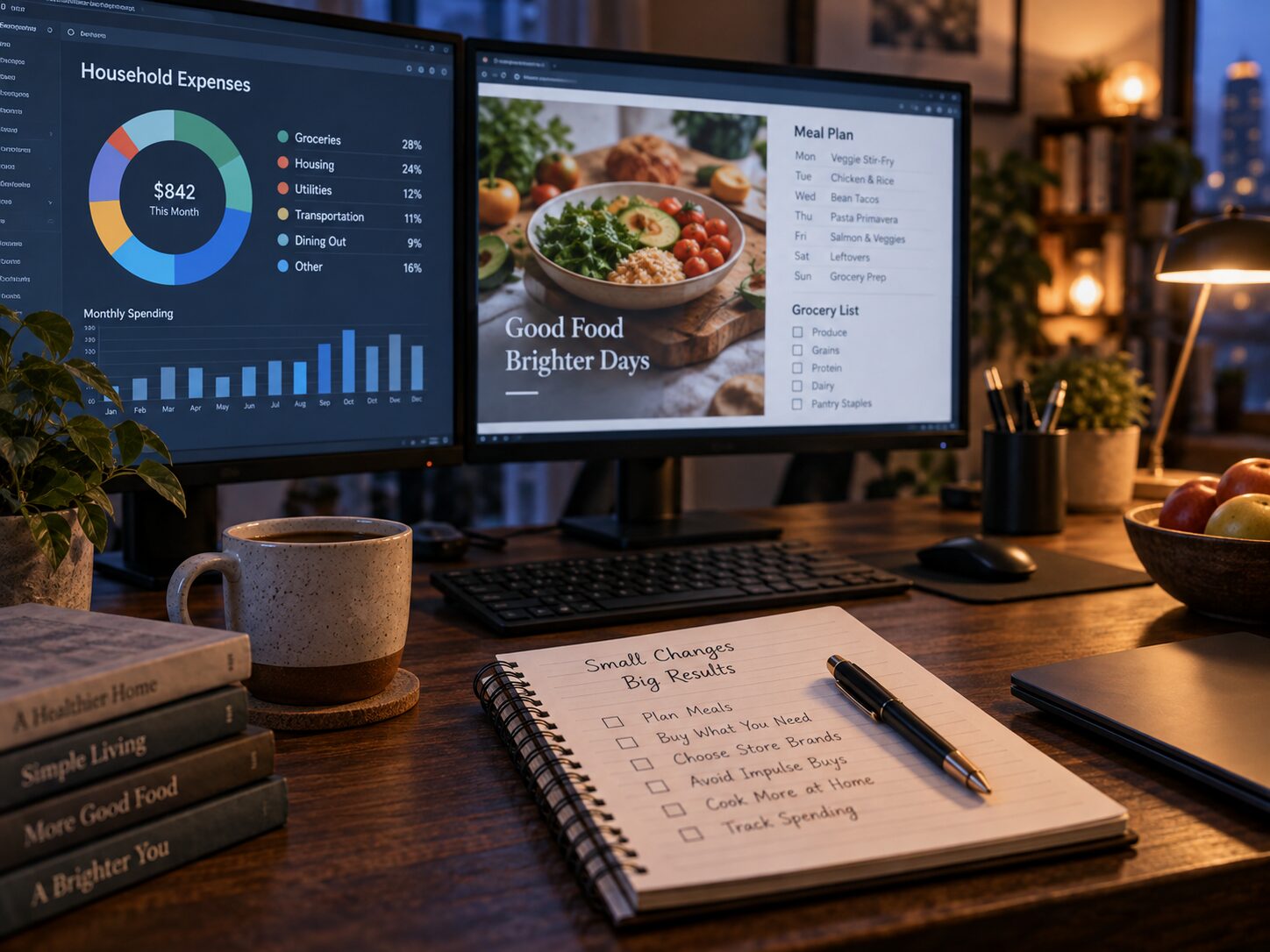
Begin by reviewing one to three months of grocery, restaurant, and food-delivery transactions. Separate groceries from household supplies, alcohol, and prepared food when possible. This gives you a realistic starting point instead of an arbitrary target.
Choose a weekly or monthly grocery limit based on your income, household size, dietary requirements, and other priorities. A grocery budget should work alongside an emergency fund, debt payoff plan, retirement contributions, and necessary bills. Cutting food spending aggressively may be counterproductive if it leads to frequent takeout or makes it harder to follow medical or nutritional guidance.
Use a simple tracking method:
- Set a spending limit before the shopping trip.
- Record the total at checkout or in a budgeting app.
- Review overages by category, such as snacks, beverages, meat, or impulse purchases.
- Adjust the plan monthly rather than judging one unusually expensive week.
The Consumer Financial Protection Bureau provides general budgeting resources that can help households organize income and expenses. Its tools do not prescribe a particular grocery percentage, so use your own spending history and circumstances to set a practical limit.
2. Plan Meals Around Food You Already Have
Before making a list, inspect the refrigerator, freezer, and pantry. Identify food that needs to be used soon and build several meals around it. This prevents buying duplicate ingredients and lowers the risk that food will spoil.
A flexible plan is usually more useful than a rigid seven-day menu. For example, choose:
- Two or three main proteins, such as beans, eggs, poultry, tofu, fish, or lentils.
- Several vegetables that can work in more than one dish.
- One or two versatile grains, such as rice, oats, pasta, or whole-grain bread.
- A few breakfasts, lunches, and dinners that share ingredients.
- At least one meal made from leftovers or pantry staples.
Planning shared ingredients can reduce partial packages that go unused. A roast vegetable mixture, for example, may serve as a side dish, a grain-bowl topping, and a filling for eggs or wraps. The plan should still allow substitutions when a preferred item is expensive or unavailable.
3. Compare Unit Prices, Not Just Shelf Prices
Unit pricing shows the cost per ounce, pound, quart, or another standard measure. It is often displayed on the shelf label, although packaging and store systems vary. Comparing unit prices helps you evaluate different package sizes and brands more fairly.
Check whether the unit comparison is meaningful. A price per ounce may not tell the whole story when one product contains a large amount of water, bones, shells, or packaging. Compare the usable portion when that information is available. Also consider whether a larger package can be consumed before it expires.
For products sold by weight, a kitchen scale can help compare value after cooking. Dried beans may have a lower purchase price than canned beans, but they require soaking, cooking time, water, and energy. Neither option is automatically better for every household. The appropriate comparison includes total cost and convenience.
4. Use Store Brands and Flexible Substitutions
Store-brand products can reduce spending on staples such as flour, rice, oats, frozen vegetables, canned tomatoes, beans, and basic dairy products. Compare the ingredient list, package size, nutrition information, and quality rather than assuming that either a national brand or a store brand is always superior.
Build a substitution list before shopping. Examples include:
- Frozen vegetables instead of fresh when the fresh option is costly or likely to spoil.
- Canned or dried beans instead of some meat in soups, tacos, salads, and casseroles.
- Seasonal fruit instead of a fruit that was transported from a distant growing region.
- Plain yogurt plus fruit instead of individually packaged flavored yogurt.
- Whole chicken, larger cuts, or plant proteins instead of individually portioned items, when preparation time permits.
Do not treat substitutions as a reason to ignore allergies, religious restrictions, medical diets, or household preferences. A purchase that nobody will eat is not a saving.
5. Shop With a Short, Prioritized List
Divide your list into three groups: essential items, useful if reasonably priced, and optional items. Shop for essentials first. If the total is already near your limit, delay optional purchases rather than relying on impulse decisions at checkout.
Check the list against your inventory immediately before leaving. Shopping alone, avoiding shopping while hungry, and choosing a smaller basket can reduce unplanned purchases for some people, although these tactics are not equally convenient for every household.
Store layouts, end-cap displays, and checkout areas are designed to attract attention. Treat displays as suggestions rather than evidence of a good value. A sale price may still be expensive compared with another product, and buying an item only because it is discounted can increase total spending.
6. Reduce Food Waste Through Storage and Portion Control
Food waste is a direct financial loss because the household pays for food that is never eaten. Label leftovers with the date, store them promptly, and place foods that need to be used soon where they are visible. Freeze appropriate items in usable portions when you do not expect to eat them in time.
Learn how your refrigerator works. Some foods keep better in a cold drawer, while others should remain dry or well ventilated. Keep raw meat and seafood separated from ready-to-eat foods, and follow food-safety instructions from the U.S. Department of Agriculture and the U.S. Food and Drug Administration.
Understand date labels carefully. In the United States, the FDA explains that, with the exception of infant formula, federal law generally does not require food manufacturers to place quality-based date labels on packaged foods. Labels can still provide useful guidance, but they do not all mean the same thing. Follow package instructions and discard food that shows signs of spoilage or has been handled unsafely. Do not take food-safety risks to avoid waste.
Serve smaller initial portions when practical and allow people to take more. This can reduce uneaten food without requiring anyone to eat less than they need.
7. Choose Convenience Deliberately
Convenience foods can be worthwhile when they prevent restaurant spending, help someone maintain a medically appropriate diet, or make home cooking possible during a busy period. The objective is not to eliminate all prepared items. Instead, compare the price of convenience with its realistic alternative.
For example, a prepared salad may cost more than assembling one from separate ingredients, but buying the ingredients may lead to waste if you lack time to wash and use them. A middle option could be a bag of frozen vegetables, pre-cooked grains, or a larger batch prepared once and portioned for later.
Calculate the cost per serving when comparing homemade and prepared meals. Include ingredients, expected waste, and the time required. Time has value, but it should not be assigned a false level of precision. A practical estimate is enough to decide whether a shortcut fits your budget.
8. Use a Shopping Rhythm That Matches Your Household
Weekly shopping works well for households that have limited storage or eat many fresh foods. Less frequent shopping may help households avoid repeated impulse purchases, but it requires planning and safe storage. There is no universally optimal schedule.
Consider a two-part rhythm: buy durable staples and frozen foods on a planned schedule, then purchase small amounts of highly perishable food as needed. This can lower waste without requiring a large upfront grocery bill.
Compare prices across several nearby stores only when the time, transportation, and effort are reasonable. A lower shelf price may be offset by fuel, delivery fees, or extra purchases made during multiple trips. Online ordering can reduce browsing temptations for some shoppers, while service and delivery fees can raise the total for others.
Pros and Cons of Coupon-Free Grocery Savings
Potential advantages
- Less time spent searching for, storing, and managing coupons.
- More focus on recurring habits such as meal planning and waste reduction.
- Methods that can work across different stores and product categories.
- Greater flexibility when a discounted brand is unavailable.
- Skills that support broader budgeting goals, including debt payoff and emergency-fund contributions.
Potential disadvantages
- Some shoppers may save more by combining coupons with these methods.
- Cooking from basic ingredients can require planning, equipment, and time.
- Bulk purchases can increase waste or create cash-flow pressure.
- Store-brand quality and availability vary by product and location.
- Strict cost-cutting can become harmful if it reduces food quality or ignores medical needs.
How Grocery Savings Fit Into Broader Personal Finance
Lower grocery spending can create room in a household budget, but the freed money should have a clear purpose. You might direct it toward a starter emergency fund, high-interest debt, retirement planning, or a tax-advantaged account when appropriate. Once high-interest debt and basic reserves are addressed, some households may consider long-term investing, such as diversified index funds, according to their risk tolerance and time horizon.
Other financial topics, including credit score optimization, side hustles, tax optimization, passive income, and real estate investing, may also affect a household’s finances. Grocery savings alone cannot replace adequate income, insurance, retirement contributions, or a sound debt strategy. Treat food savings as one controllable budget category rather than a complete financial plan.
Limitations and When to Seek Help
Food prices, store selection, transportation, household size, local taxes, and dietary needs differ substantially. A strategy that works in a large city may not work in a rural area with limited retailers. People with food allergies, diabetes, kidney disease, eating disorders, or other health concerns should not change their diet solely to reduce cost without appropriate professional guidance.
Food insecurity also limits the usefulness of ordinary budgeting advice. If you regularly lack enough food, consider local food banks, community programs, school meal programs, or government assistance where available. The USDA’s Food and Nutrition Service provides information about several U.S. nutrition-assistance programs, but eligibility and application rules vary.
Concise Q&A
What is the fastest way to save on groceries without coupons?
Review what you already own, make a short meal plan, set a spending limit, and compare unit prices. These actions can affect the next shopping trip without requiring a long-term system.
Are store brands always cheaper?
No. Store brands are often competitive, but prices vary by product, package size, and store. Compare unit prices and ingredients rather than assuming one brand is always the best value.
Is buying in bulk a good way to save?
Only if the household will use the product before quality or safety declines and the purchase does not strain cash flow. Divide bulk purchases into practical portions and account for storage space.
Should I buy fresh, frozen, or canned food?
All three can fit a budget. Choose based on price, nutrition, storage life, preparation time, and the likelihood that the food will be eaten. Check labels for added sodium, sugar, or sauces when those ingredients matter to your diet.
How much should I spend on groceries?
There is no single correct amount. Use your household’s spending history, income, local prices, nutritional needs, and financial goals to set a sustainable limit. The USDA Food Plans can provide a reference point, but they are not a personalized budget and may not reflect your local costs.
Sources and Comparison Methodology
This article uses a practical comparison method: evaluate total usable cost, expected waste, nutrition, preparation time, storage requirements, and safety instead of comparing shelf prices alone. Named reference sources include the USDA Food Plans and Cost of Food at Home, the Consumer Financial Protection Bureau budgeting resources, the U.S. Food and Drug Administration guidance on food product dating, and the USDA Food Safety and Inspection Service food-safety guidance. These sources provide general information, not a guarantee of savings or a substitute for individualized financial, nutritional, or medical advice.
Informational disclaimer: Grocery prices and financial circumstances vary. Use safe food-handling practices, protect medically necessary dietary needs, and consult a qualified financial or health professional before making decisions that could materially affect your finances or health.

